Some of the biggest security risks facing businesses are not the ones they expect. They are the ones they have become accustomed to overlooking.
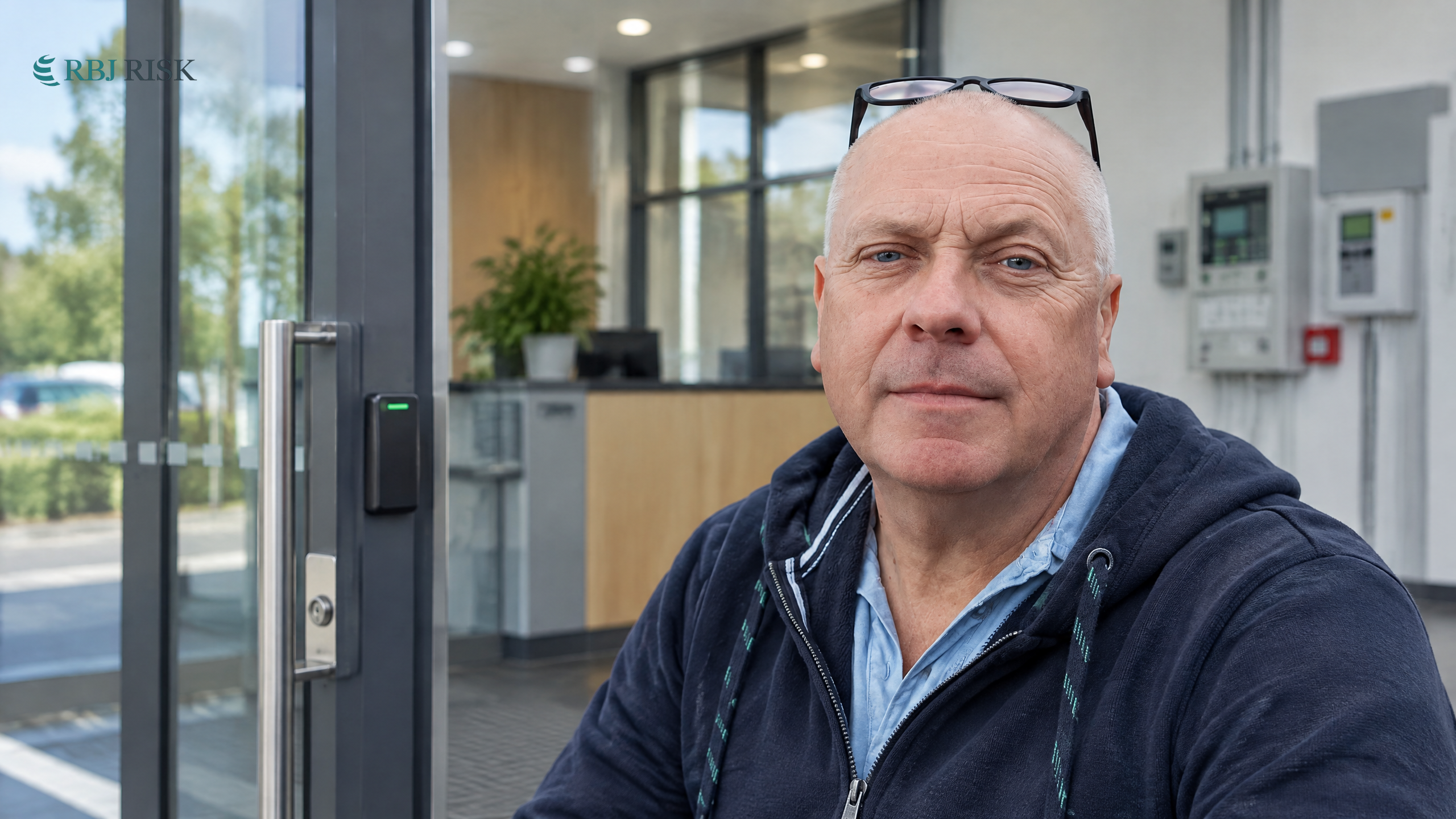
After more than 20 years working in security, advising businesses, protecting high-profile individuals and operating in challenging environments, one lesson has remained consistent: having security measures in place does not necessarily mean you are secure.
Many organisations invest in CCTV, alarms, access control and physical barriers. These are all important, but the real question is whether they work together effectively, whether people understand their responsibilities and whether anyone has taken the time to identify the weaknesses.
Here are five important lessons every business should take seriously.
1. Never confuse having security with being secure
A business can have cameras covering its premises, an alarm system and controlled entry points, yet still have significant vulnerabilities.
Equipment can be poorly positioned, access permissions can become outdated and procedures can be ignored over time. In some cases, businesses continue relying on systems that were installed years ago without checking whether they still meet their operational needs.
The important lesson is that security should be measured by how effectively it reduces risk, not by how much equipment has been purchased.
A proper assessment looks at the complete picture, including the premises, people, procedures and technology.
2. Your people can be your strongest protection, or your weakest link
Security is not solely the responsibility of a security officer or facilities manager. Everyone working within an organisation has a role to play.
Consider how easily an unfamiliar visitor might follow an employee through a secure entrance, or how often staff allow someone into a restricted area because they appear to have a legitimate reason to be there.
These situations are not always the result of deliberate wrongdoing. Often, they happen because procedures are unclear, staff have not received appropriate guidance or people become too comfortable with familiar routines.
Businesses need straightforward procedures that employees understand and can follow consistently. Security awareness should be part of everyday operations, rather than something discussed only after an incident.
3. Small weaknesses can create much bigger problems
A door that does not close properly, a poorly managed set of keys, an unmonitored delivery entrance or an area outside CCTV coverage may appear relatively insignificant.
However, vulnerabilities rarely exist in isolation. When several small weaknesses combine, they can create opportunities that a business may never have considered.
For example, an unsecured side entrance combined with inconsistent visitor procedures could undermine an otherwise well-managed access control system.
This is why looking at individual security measures in isolation is not enough. Businesses need to understand how different parts of their security arrangements interact.
[IMAGE SUGGESTION 1]
4. Security needs to keep pace with the business
A company’s security arrangements should not remain unchanged while the organisation grows and evolves.
New premises, additional employees, changes in working patterns, contractors, deliveries and valuable new equipment can all affect the risk profile.
A warehouse operating with a different shift pattern may have different access requirements. An office expanding into additional floors may need to reconsider how visitors and staff move around the building.
What worked three years ago may no longer be appropriate today.
Regular reviews help businesses recognise these changes and make sensible adjustments before weaknesses become more serious.
5. Prevention is usually better than reaction
One of the most important lessons from years in security is that businesses often give security greater attention after something has gone wrong.
An incident can bring immediate costs, operational disruption, management time, insurance complications and potential reputational damage. The impact can extend well beyond the initial loss.
A proactive approach gives organisations the opportunity to identify weaknesses, prioritise improvements and make informed decisions before an incident occurs.
This does not mean every business needs the most expensive security systems or a complicated security operation. It means understanding the risks and investing appropriately in the measures that genuinely make a difference.
The question every business should be asking
Good security is not about creating an environment where nothing can ever go wrong. No system can offer that guarantee.
It is about understanding what could go wrong, recognising where vulnerabilities exist and ensuring the right measures are in place to reduce the likelihood and impact of an incident.
At RBJ Risk, we help businesses take an independent look at their physical security arrangements, identify potential weaknesses and understand where practical improvements can be made.
If you have not reviewed your organisation’s physical security recently, it may be worth asking whether your current arrangements are still doing the job you expect them to do.
If you’d like an independent assessment of your organisation’s physical security, contact me directly.
One final question: When did your business last properly test its security arrangements, rather than simply assume they were working?